


On September 23, 160 affiliate marketing leaders joined us at the Fisher Bay Observatory at the Exploratorium in San Francisco. 80 companies. The audience was roughly 45% lenders, 40% publishers, 15% ecosystem partners (the bureaus, data platforms and technology players companies in the first two groups work with).
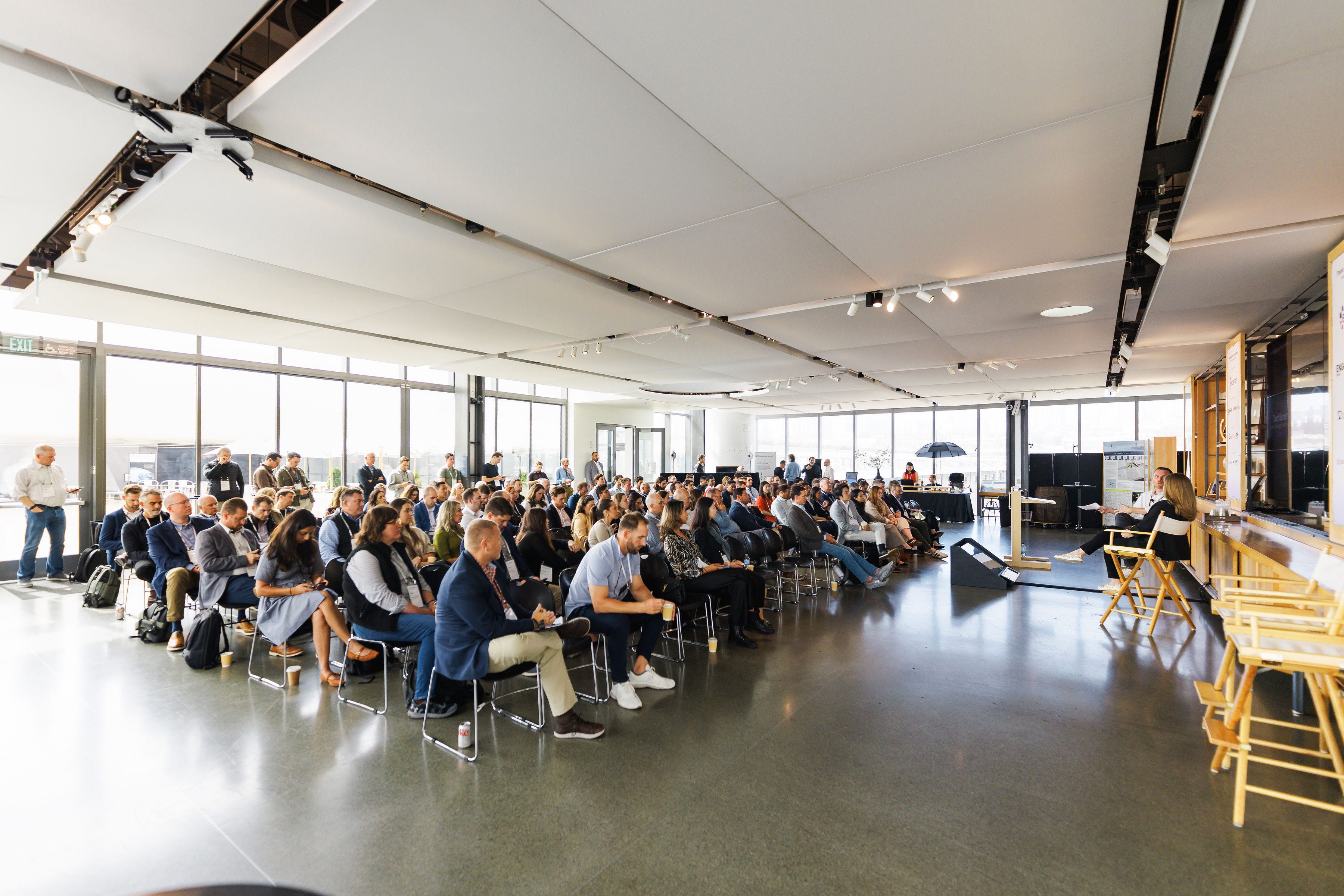
White lanyards for the lending side, black for publishers, so you could read the room from across it.
Then a ship docked at the pier next door and about 280 Mexican sailors serenaded the room as we got started. And yes, those are actual people spread across the sails!
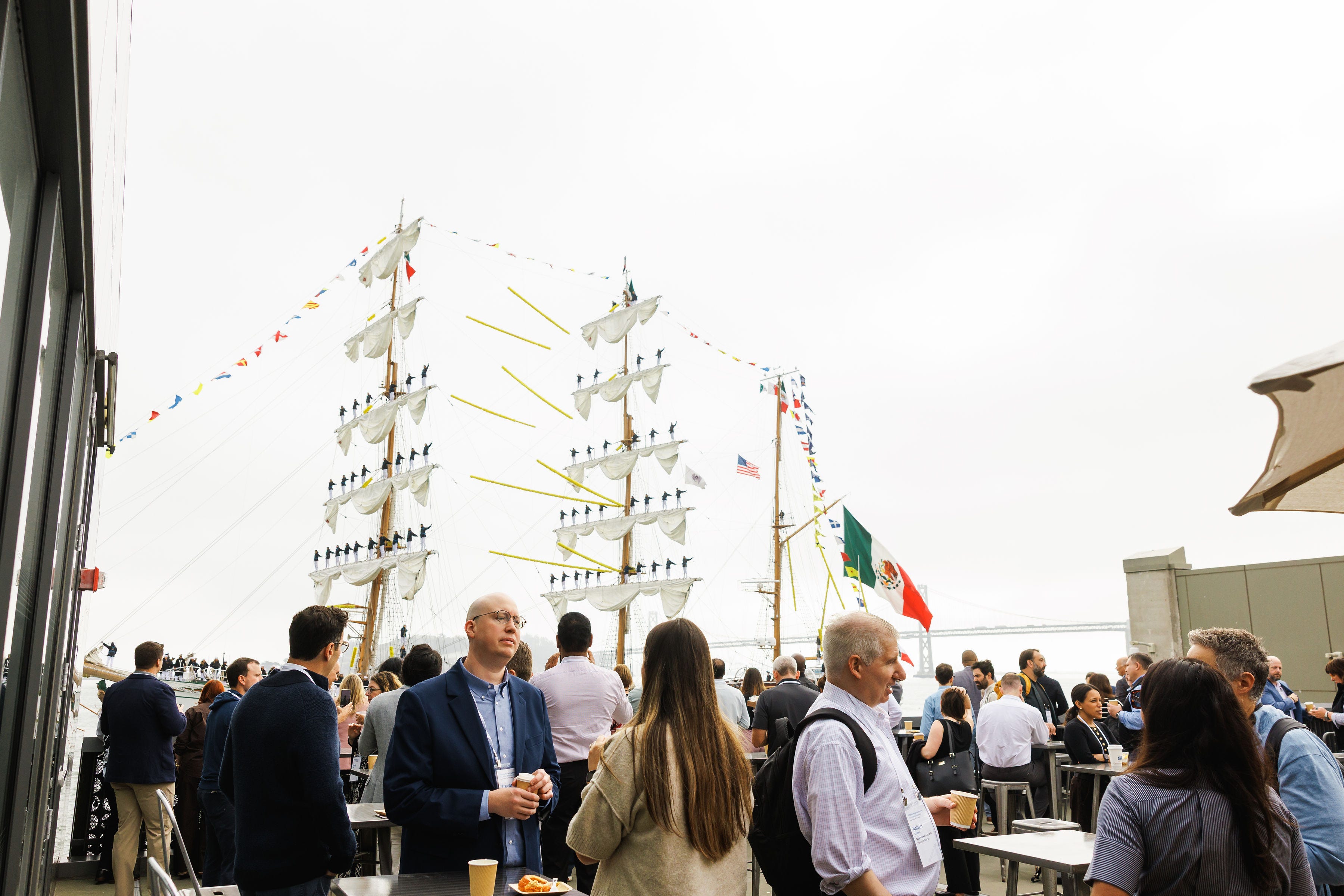
That was not in the run of show, and had nothing to do with consumer lending. But it was a nice surprise!
Six months passed between Carlos’s LinkedIn post floating the idea and a full room on the pier.
The event wouldn’t have come together without the sponsors who decided this corner of the industry deserved its own room:
Experian (Headline Sponsor)
Engine by Gen and Prism Data (Presenting Sponsors)
Tare, EXL and The ICS Corporation (Gold Sponsors)
Spinwheel, Bulldog Media Group, and New Market Growth (Supporting Sponsors).
Thank you for your support in making this happen! We couldn’t have done it without you!
What happened on stage
We won’t share all the details but will give you a sense of what the day looked like.
A central theme we explored throughout the day: what happens to this channel when the consumer stops clicking?
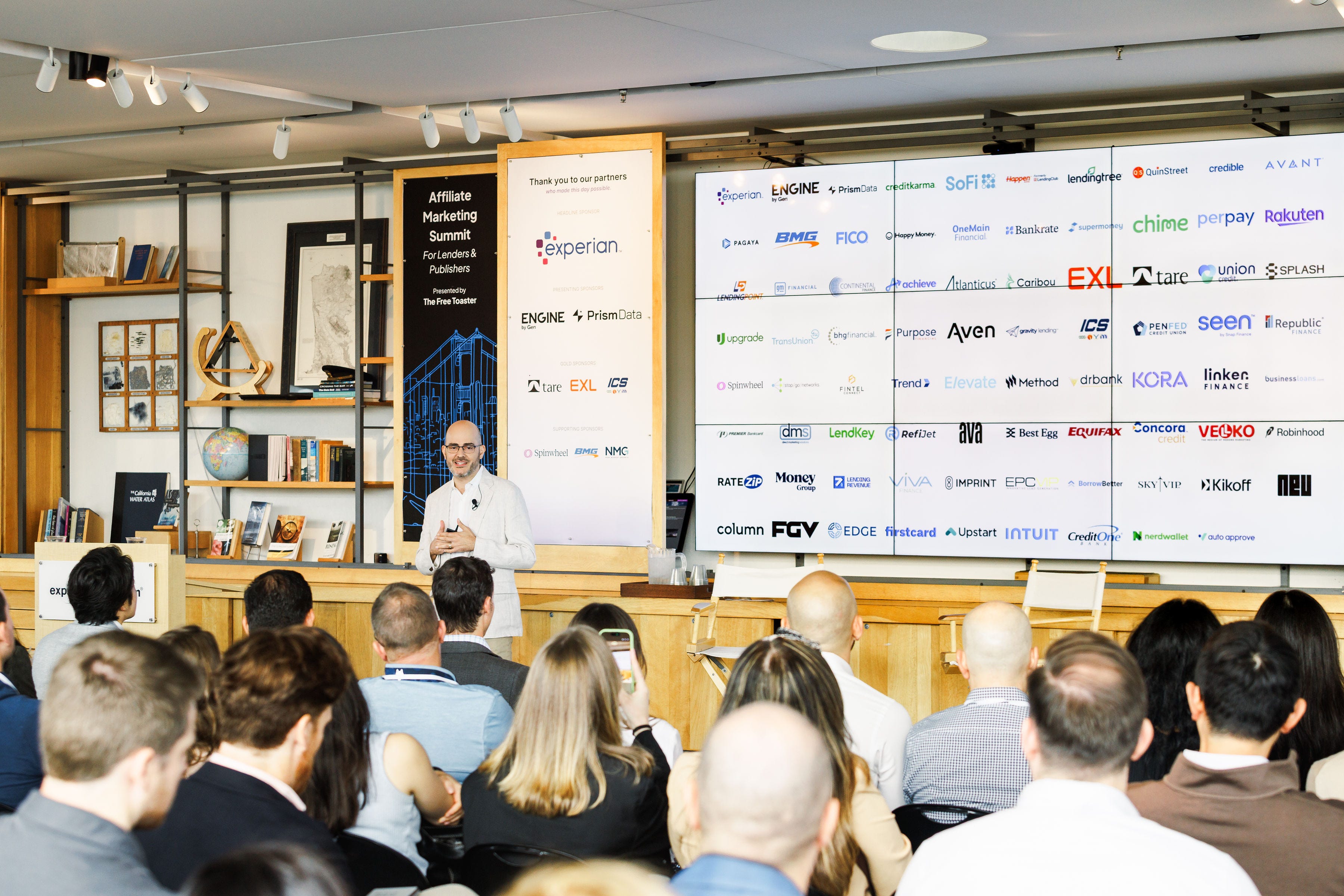
Opening fireside: Rakesh Patel, EVP & General Manager, Experian, with Carlos
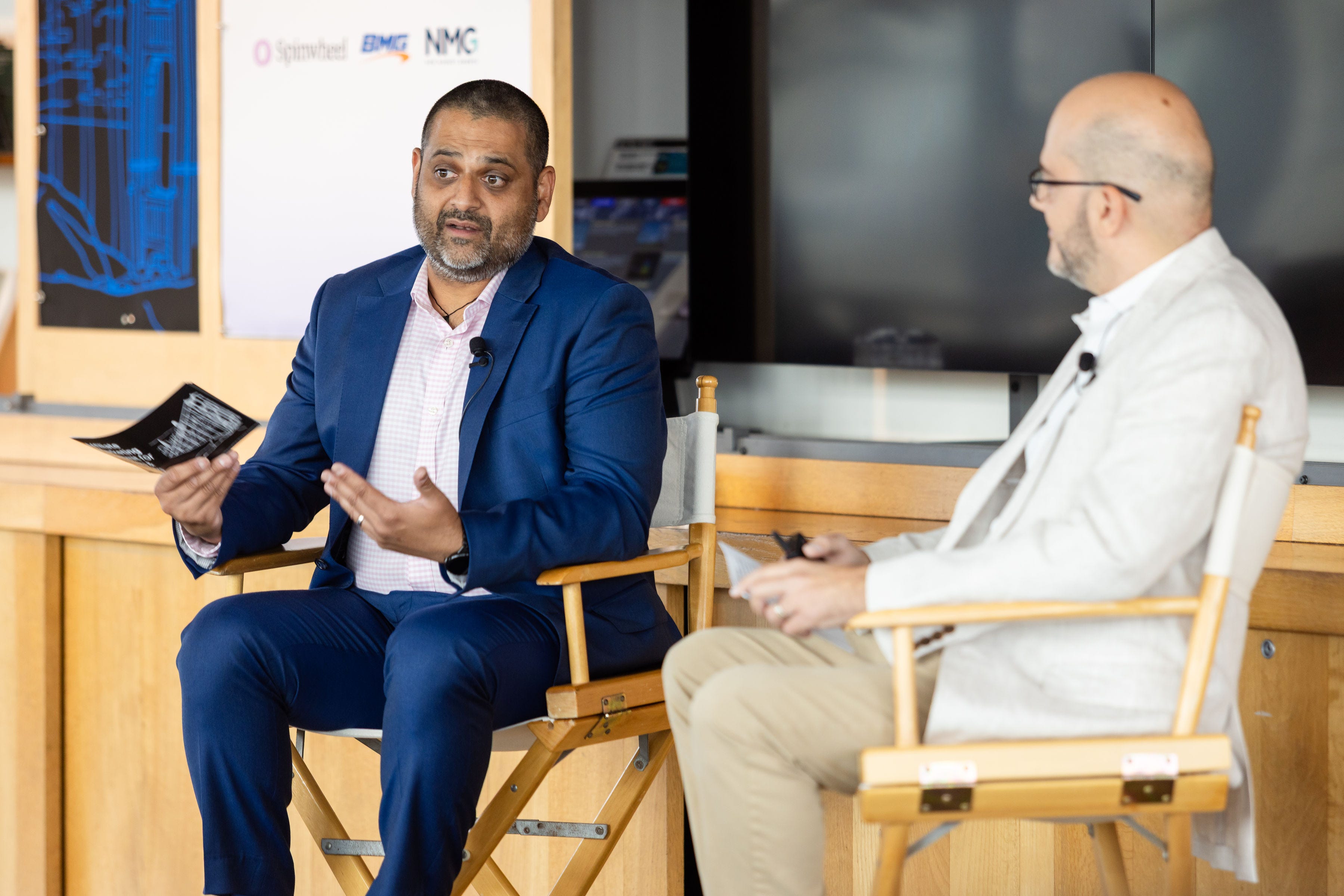
Six months before the Summit, Carlos posted the idea on LinkedIn. Within a couple of hours Rakesh had commented, a call followed, and Experian became the headline sponsor. So Carlos opened by asking him why.
The answer set the tone for the day. The lenders, publishers and platforms in the room are one industry facing one shift in how consumers find credit, and the old reflex of treating the other marketplaces as competitors doesn’t survive that shift. Collaboration came up more than any other word. So did “lean in” on AI, with the caveat that trust and risk discipline are the reason any of these businesses exist in the first place.
TOASTER’S TAKE: Experian’s goal is to be known for where consumers are heading, well beyond the credit file. When one of the largest players in the market would rather collaborate than compete, isn’t afraid to put its competitors in the same room, and backs its thought leadership with real data, it makes sense to tune in.
The Agentic Marketplace: Erik Rehder, VP Product Management, Experian

Erik runs product for Experian’s marketplace and opened with an experiment on his own family: he gave a consumer AI agent access to his card and had it email his college-age daughter a weekly spending report. It worked. She texted back that she’d cut back.
That’s the setup for the premise: consumers are already asking AI which card or loan to pick, and the answers are being assembled mostly from publisher content and Reddit, with lenders almost absent. Then a vibe-coded demo of where it goes. A personal finance agent named Juno, working for a 25-year-old in Madison, Wisconsin, notices a credit tier change overnight and goes shopping, negotiating with the issuers’ agents. The issuers without an agent weren’t in the conversation. “Your product is the product again,” because the agent compares fit and your brand has to pitch itself all over again.
TOASTER’S TAKE: Most of this room either runs a marketplace or sells through one. If offers get negotiated agent to agent, the open question is who owns the consumer’s agent. That’s the fight of the next few years, and the companies in this room are the obvious candidates.
The Next Generation of Affiliate Marketing: Zach “Burnie” Burnett, GM Lending, Engine by Gen, and Amanda Share, VP Product Affiliates, Pagaya
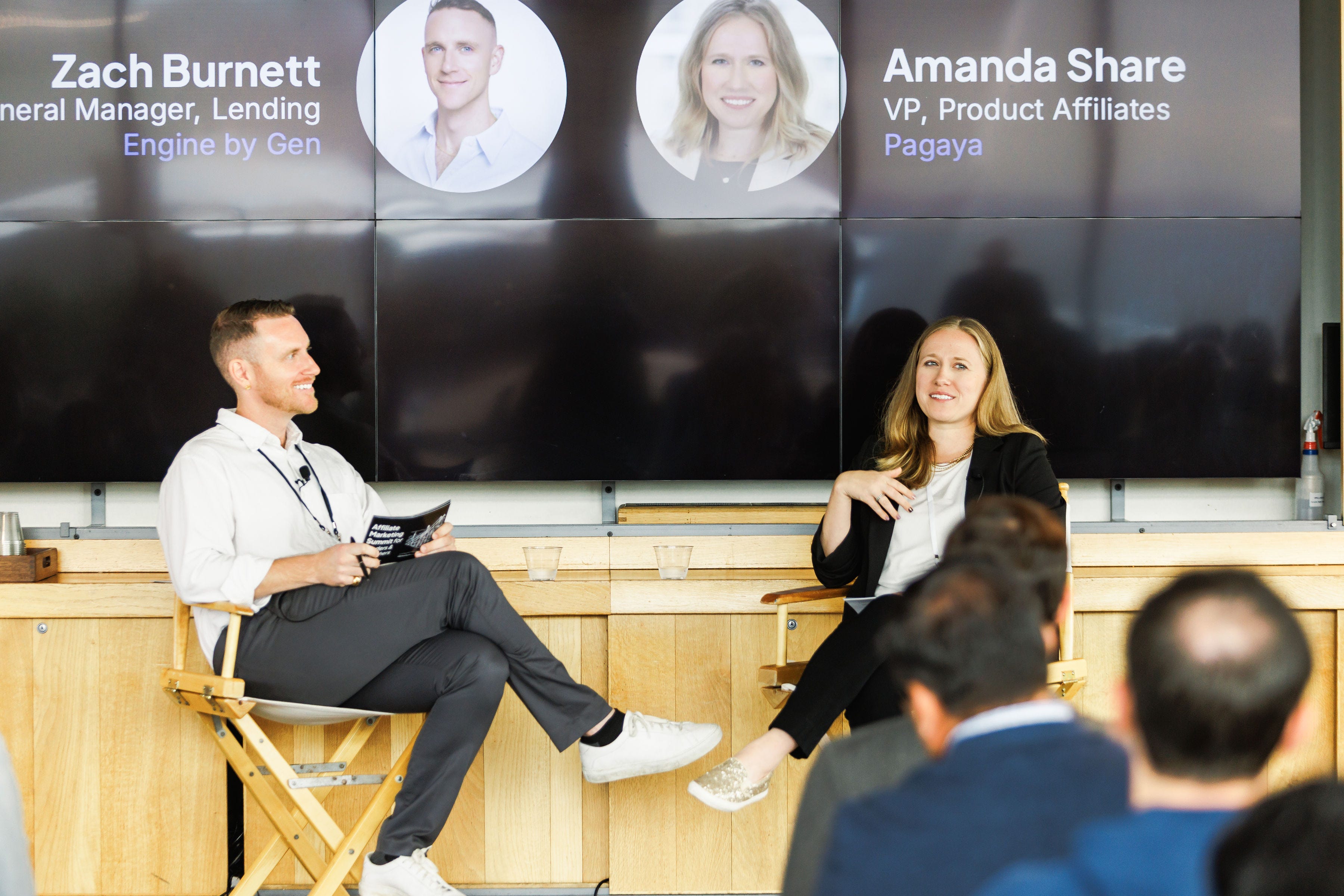
Ten years ago these two were on opposite ends of the same phone call: a lender asking for more applications, a platform trying to deliver them. Their fireside traced what changed. The ask moved from volume to fit. Feedback loops between lender and publisher went from nonexistent to the thing that lets lenders launch new products and terms. And on a rate table with dozens of near-identical offers, the differentiator is who you choose to partner with and what data you bring, which is why Engine has spent two years pulling bureau data and now cash flow data into its platform.
Amanda’s line about marketing being a data job landed. So did Burnie’s distinction between a vendor and a partner.
TOASTER’S TAKE: Near-perfect competition on APR squeezes everyone on the table. The lenders winning placement in 2027 will be the ones feeding down-funnel data back to their publishers, because that’s what the publishers want most and few lenders give.
Find More Qualified Customers With Cash Flow Intelligence: James Brandon, Head of Product, Prism Data
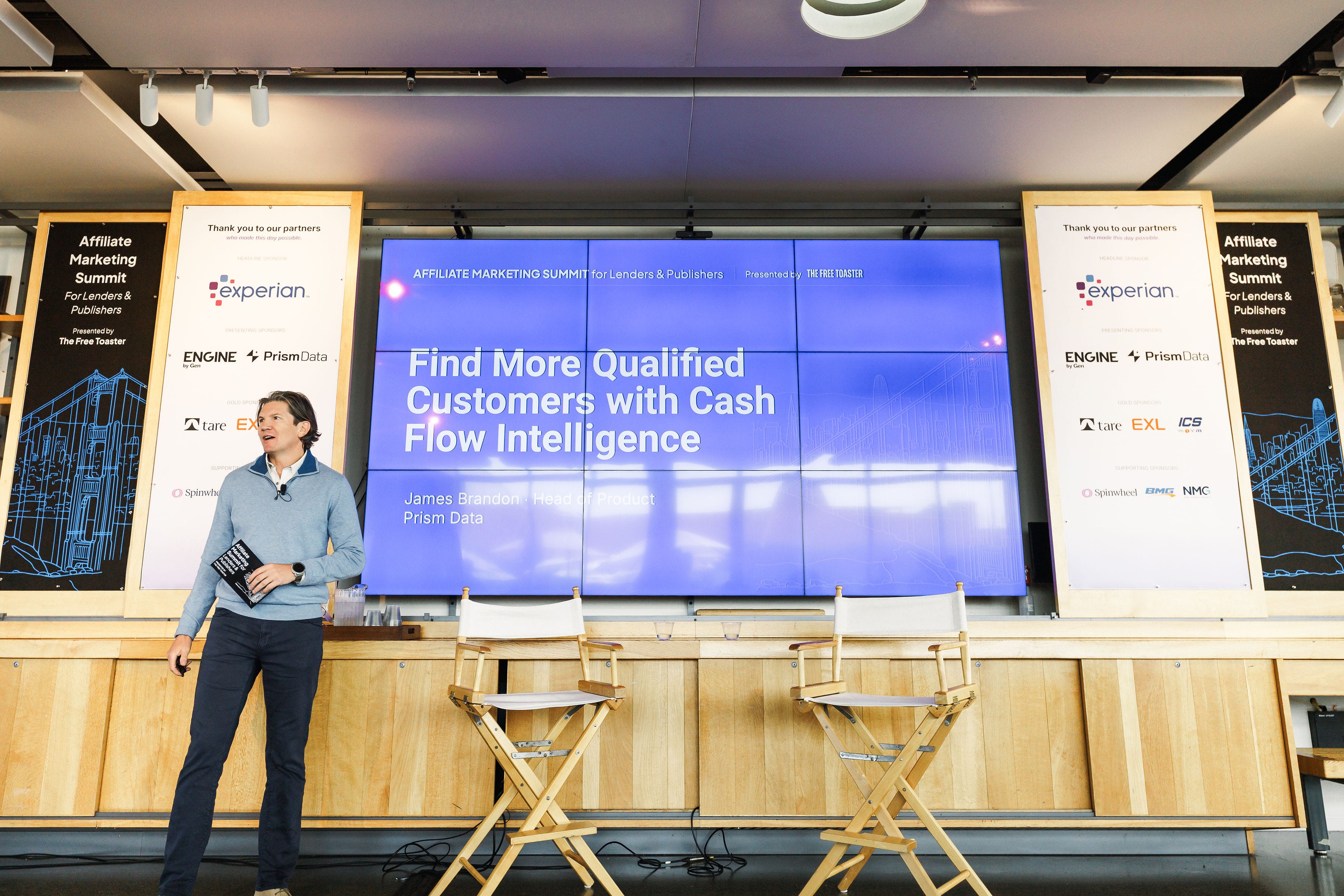
With the right intelligence layer applied, bank transaction data can reveal positive financial behaviors that traditional credit files miss: on-time BNPL and rent-to-own payments, an income portfolio of payroll plus gig plus benefits, and meaningful savings buffers. Cash flow intelligence enables lenders to identify creditworthy borrowers whose financial strength might otherwise go unrecognized across credit tiers. James illustrated this with an example of a near-prime applicant whose cash flow revealed prime-level creditworthiness, moving her from the middle of the offer wall to the top.
His rebuttal to the usual objection, bank-link friction, was that innovations in data aggregation have significantly reduced that friction, and marketplaces are the natural place to ask consumers to connect their accounts.
TOASTER’S TAKE: We’ve covered cash flow underwriting as a second-look and credit-line tool for two years (e.g., here). Using it to decide who gets which offer before they apply is a different business, and it’s the one that moves CAC.
The announcement: Engine by Gen x Prism Data
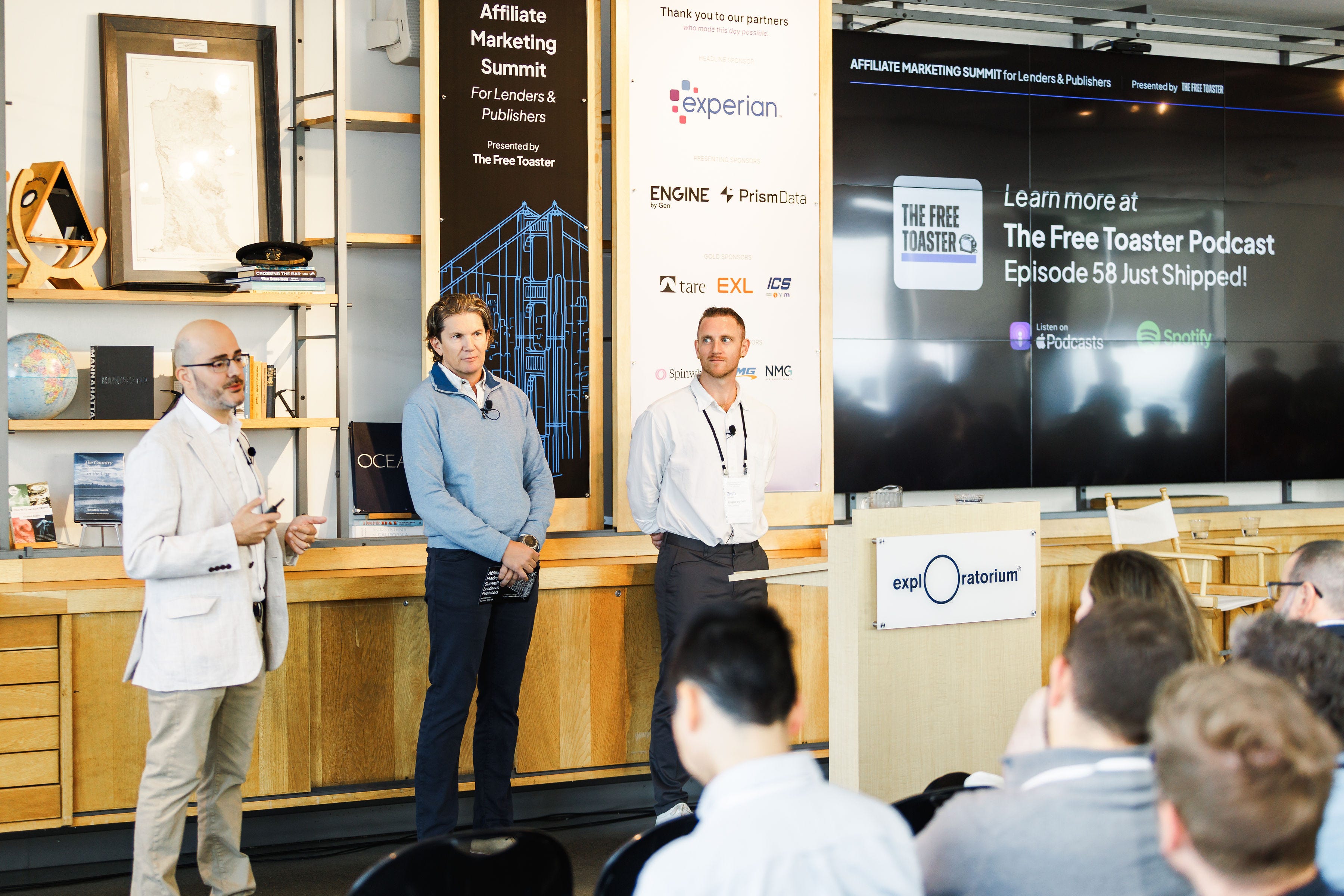
Right after James’s talk, Burnie came back up and the two announced that Prism’s cash flow analytics are live on Engine’s platform for lenders, through the Spark hosted model and by API. We recorded the mechanics with James and Engine’s David Friermor two days earlier and it dropped that morning: E058, Cash Flow Data at the Marketing Stage. Our write-up of why it matters ran the following week.
The Application Form Is Dead: Tomás Campos, CEO, Spinwheel, interviewed by Supriya Gupta, Founder & CEO, Executive Voice Engine (and former Credit Karma exec).
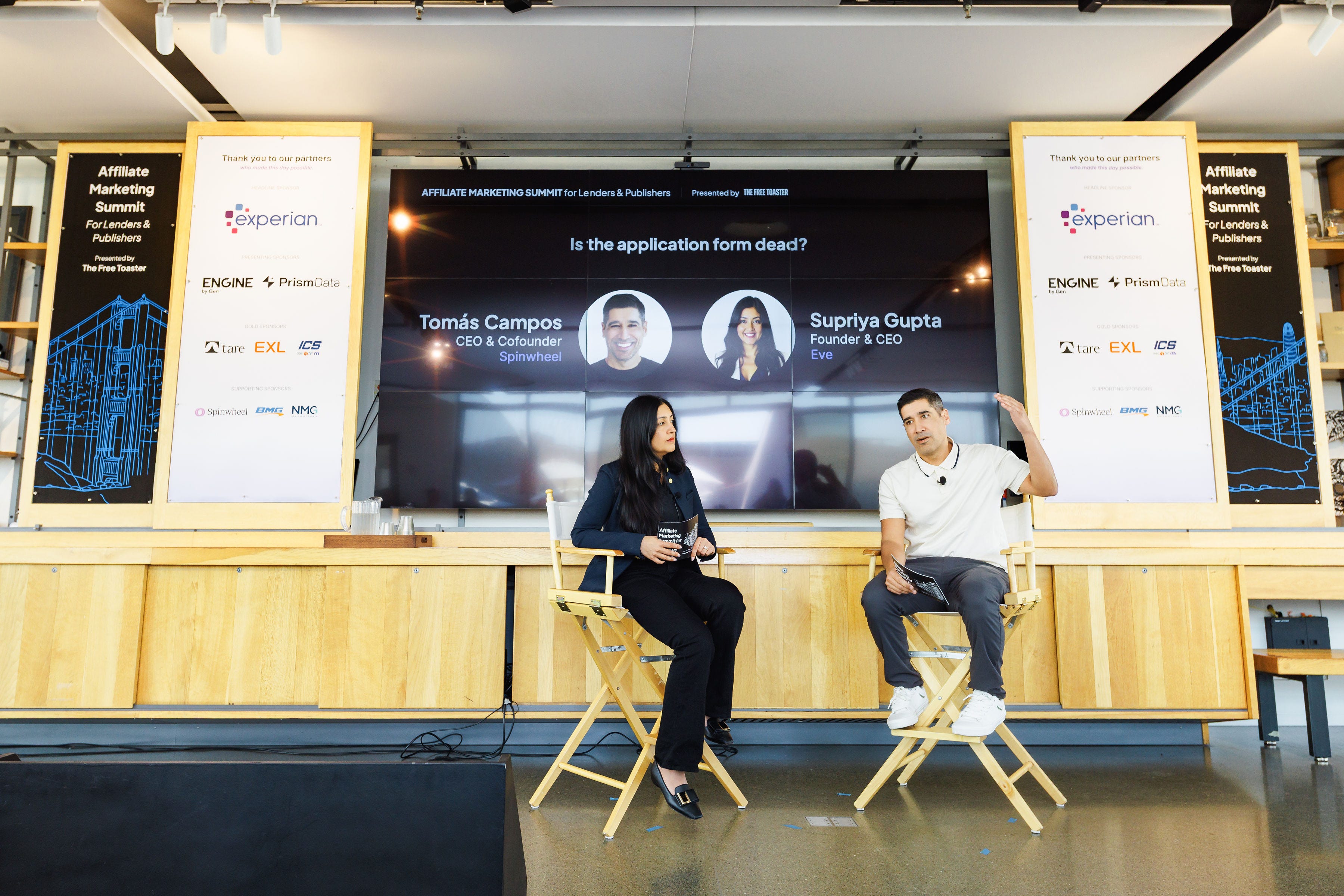
Supriya helped build Lightbox at Credit Karma and later led product and AI there, so she was the right person to press Tomás on his provocation. The claim: a meaningful share of applicants now have an AI assistant open in one window and your application in the other, acting as their own integration layer, and the form has to meet them there. His suggestion: start tracking what intelligence is touching your landing page the way you once tracked device and browser. (His mom still fills out the form in Chrome. His nephew applies through Perplexity’s browser. Both are your customers.)
From there it got into the hard parts. When an agent applies, who’s liable? He argued existing law already answers it, and the answer is mostly the consumer who delegated. Where does friction belong now? At the moment a human should endorse a decision rather than on every field of the form. And does identity finally get tokenized so nobody types their SSN eight times?
TOASTER’S TAKE: “Which agent sent this applicant?” will be a column in your attribution report sooner than you think.
Fewer Clicks, Higher Stakes: Stephanie Briggs, Sr. Manager, Growth, Experian
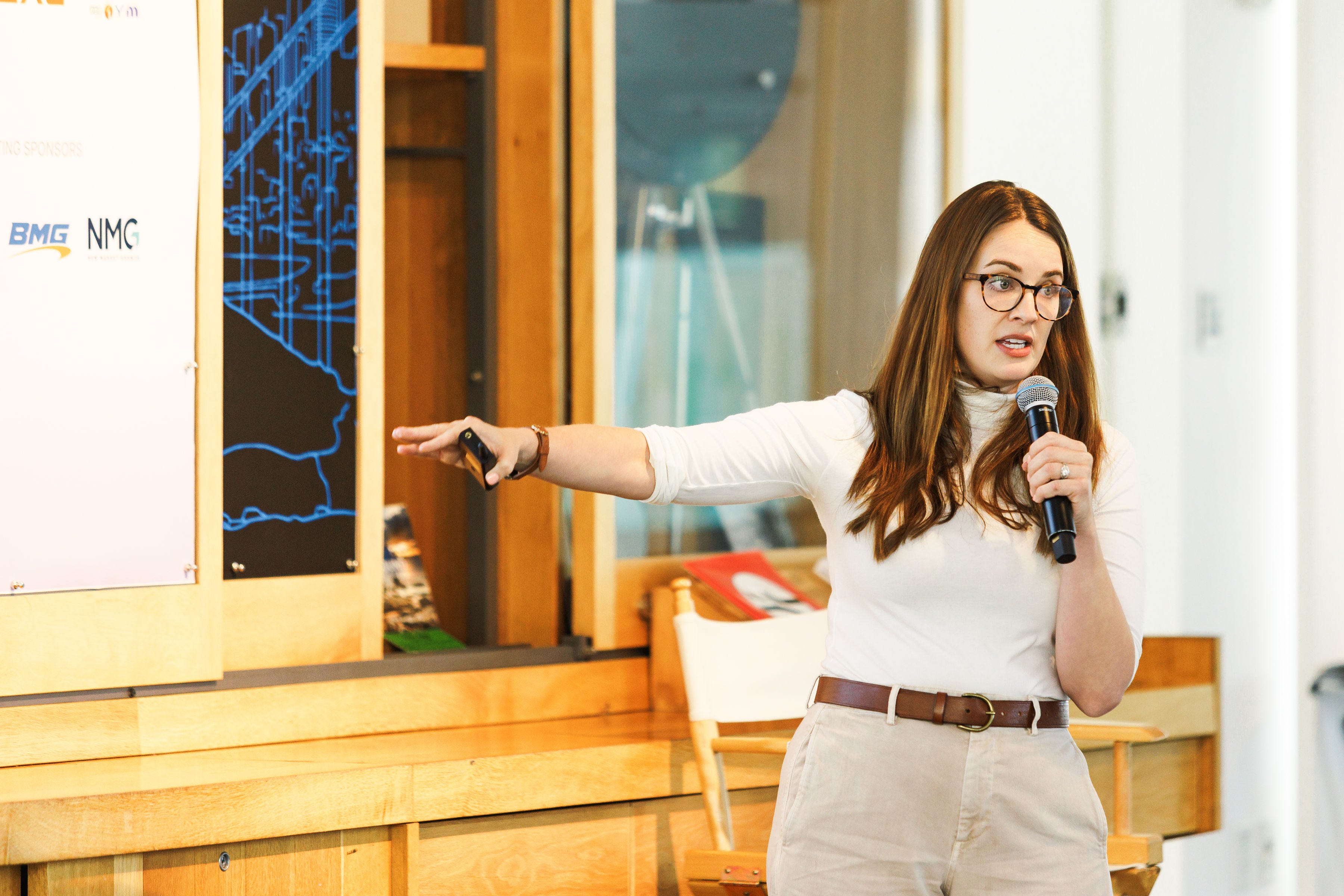
The talk the room photographed. Stephanie spent 15 years in organic search before joining Experian, and she built a custom view of two years of traffic data for the brands in the room, validated against Experian’s own internal numbers before she trusted it. Organic search fell off a cliff from 2024 to 2026, publishers took the hardest hit, lenders stayed flatter mostly because their organic traffic was people trying to log in, and paid search grew without closing the gap. Everyone’s paying more for less, and AI referral traffic is still too small to show on the same axis.
Her argument was that this is a product change in the web, as permanent as Yahoo killing AOL channels. What used to be ten searches is now one chat, so you get one shot at the customer instead of ten. Then the playbook: chase mentions over citations, insist on real user data from your AI visibility vendor (if it says you have 60% visibility, the data’s broken), and accept that most “GEO hacks” reduce to writing clearly and earning coverage.
Stephanie will be joining us soon on The Free Toaster Podcast. Look out for that Episode in November!
TOASTER’S TAKE: Carlos called it the SEO apocalypse a year ago when it was still a hunch. This was the first time we’ve seen it measured across the actual brands in this channel.
Credit Karma Lightbox: John Leu, VP, Lightbox and Strategic Product Partnerships, Credit Karma, with Carlos
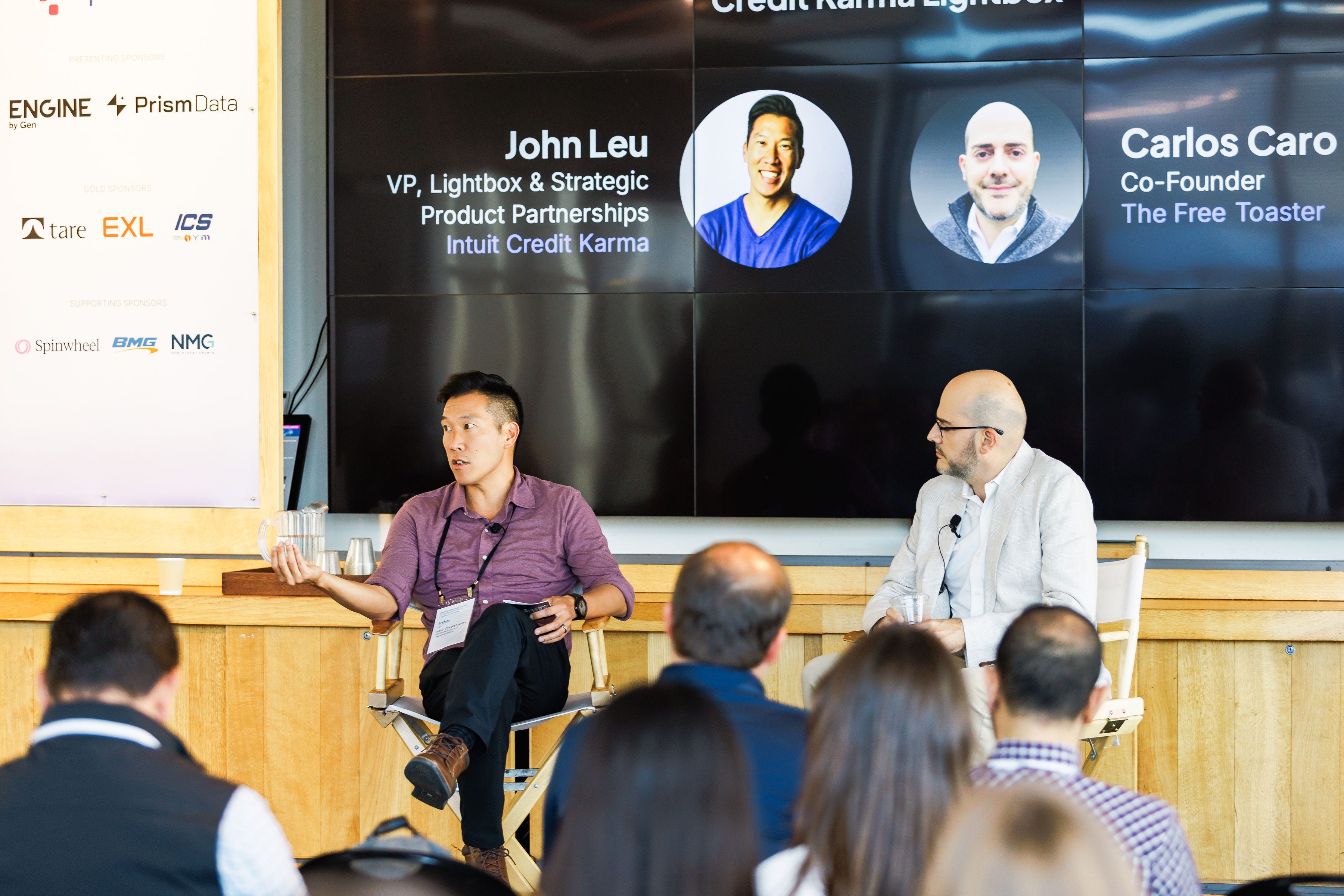
John introduced Lightbox to those not familiar with it (not many folks in the room), and talked about where they’re focused strategically.
Audience questions included: how the certainty badges are governed, whether Lightbox becomes a network other publishers can plug into, and what product types are on the roadmap for future development.
What happened off stage
The morning ran slightly ahead of schedule, so the patio opened early. Then structured networking: 90 minutes, a chime every 15, and one rule: meet at least six new people.
A bar got built during the afternoon break. The signature cocktails came with engraved ice cubes. The last fireside ran during happy hour, drink in hand.
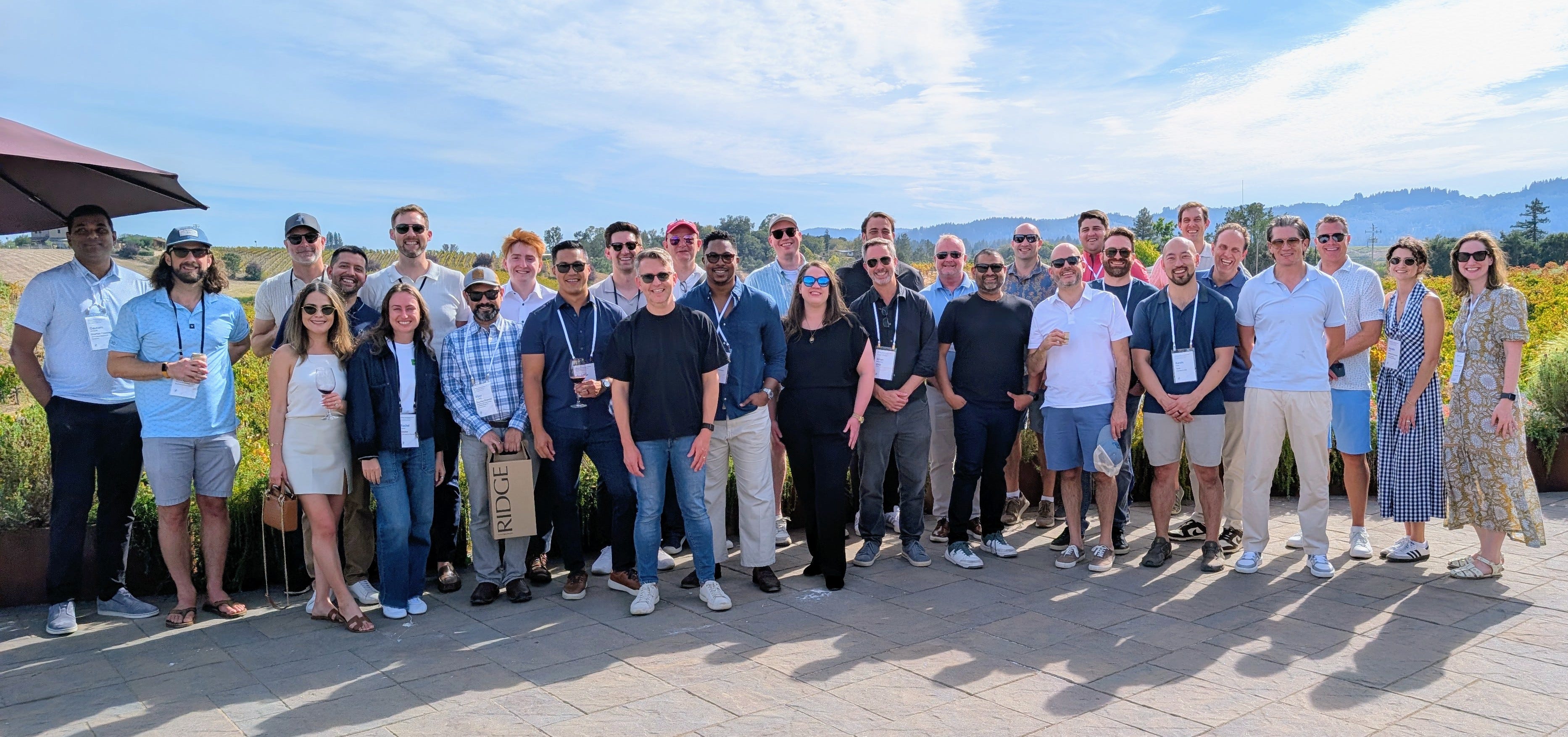
The next morning, 50 of us got on a coach to Ridge Vineyards in Healdsburg. No programming. A long lunch, a tasting, and the kind of two-hour conversation that doesn’t happen on a Zoom.
Why we did this
Carlos has been in this industry for 20 years and never found an event that felt like home. Money 20/20 is a sea of 10,000 people, and the value was always proportionate to the meetings you booked yourself weeks ahead. The large affiliate shows never dialed into consumer lending.
So we tested the opposite.
Curated dinners of 15 to 20 people, mostly in New York.
The caliber of conversation when the right people were in the right room was the whole insight. The Summit was our version of that dinner, scaled to 160 people.
We took ten minutes mid-afternoon to say who we are: two years, 200-plus newsletters, 90-plus podcasts, a jobs letter, and now this. And where we’re going: a research arm built around the quarterly earnings of the public companies this room cares about (Nick is a CFA Charterholder and intends to use it), and more of you on the podcast.
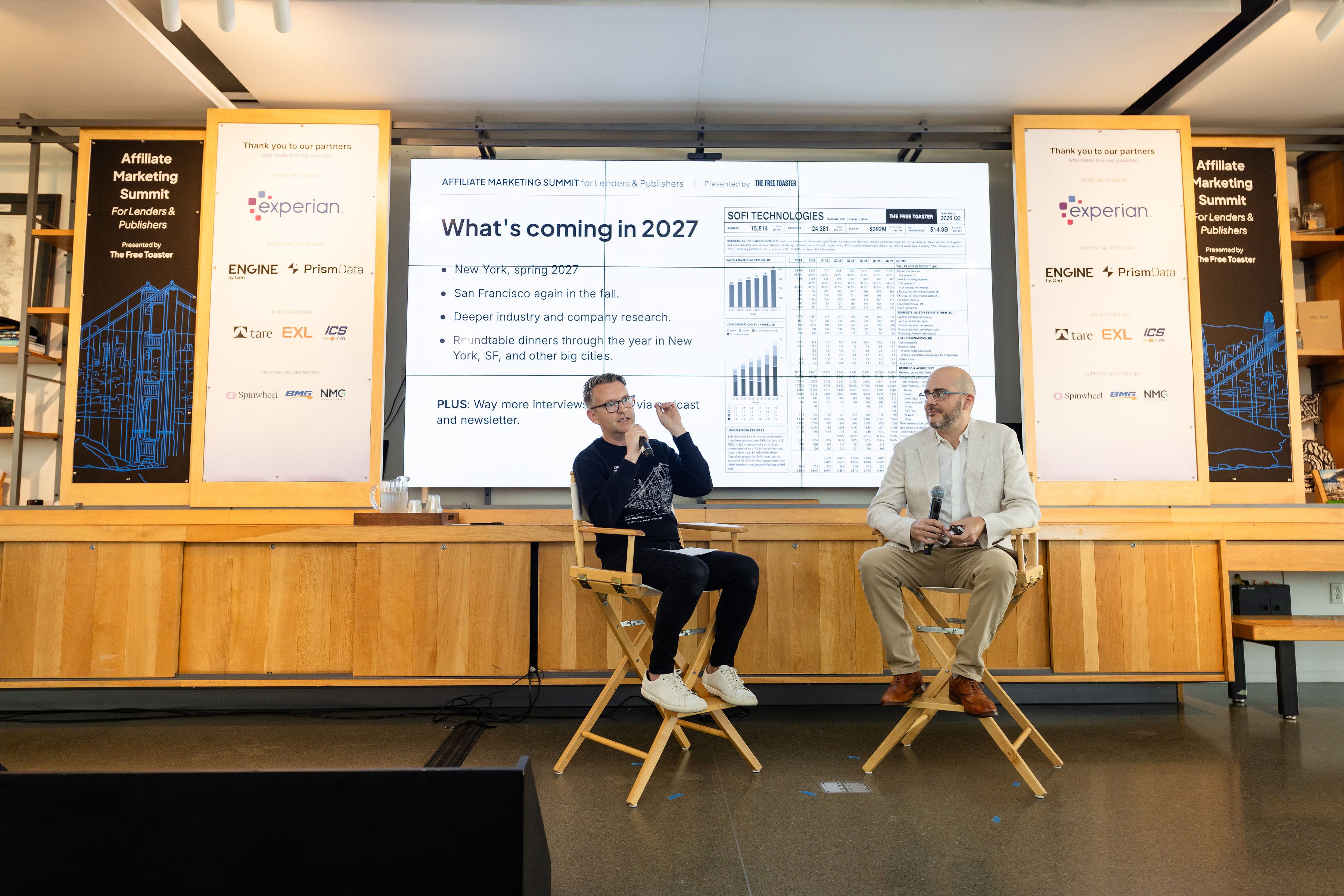
Next: New York City, April 7-8th 2027
We said it on stage and we’ll say it here.
The next Summit is in New York City on April 7-8th 2027, and this newsletter is where it will get announced first. If someone forwarded you this, subscribe now and you’ll be the first to hear about it.
Thank you to everyone that joined us on September 23, 2026.
We hope this is just the start of many more gatherings to come.
Carlos & Nick
Founders, The Free Toaster
PS: If you were there and have a story we should tell, reply to this email. We may ask you to join us on the Pod!
PPS: If you’d like to Sponsor the April 2027 Edition, now is the time to contact us!