


Hey Toaster Readers,
This week is sponsored by our friends at New Market Growth.
Capital One reported Q2 on July 21. We read the press release, listened to the earnings call, the 10-Q, and four research notes, so you don’t have to.
Most coverage focused on the $3.0 billion in net income. We pulled out the five things marketers should actually take from the quarter.
Let’s get toasting!
Carlos Caro, Founder at NMG, Co-Founder of The Free Toaster
Nick Madrid, Co-Founder of The Free Toaster and Uncovered Media
BUT FIRST, A TOASTER EVENT ALERT 👀
The Affiliate Marketing Summit For Lenders & Publishers
New Publishers & Lenders are signing up every week
September 23, 2026 - San Francisco
Day 2 (relationship building in wine country) is almost sold out
Early bird pricing ($999) ends on midnight ET on August 1st!
Learn more at events.thefreetoaster.com
Thank you to our event sponsors! Experian, Engine by Gen, Prism Data, Tare, and EXL.
Capital One runs one of the biggest acquisition budgets in consumer lending. Once a quarter, its executives explain what that budget is doing.
Here are the five takeaways from this quarter, in their own words.
1. One of the biggest marketing budgets in lending grew by 23%
The Discover acquisition is only half the story.
CEO Richard Fairbank walked us through the marketing line item on the earnings call:
“Total company marketing expense in the quarter was about $1.7 billion, up 23% year over year, driven by the addition of Discover as well as higher legacy Capital One direct marketing in our domestic card and consumer banking businesses, increased media spend, and continuing investments in premium benefits.”
What we found interesting?
👉 Legacy Capital One direct marketing is up, independent of the Discover acquisition.
We’ve tracked Capital One as a mail and media heavyweight since well before the Discover deal.
If you compete with them in channels like Direct Mail, affiliates, paid search or paid social, it sounds like the competition is getting more intense.
2. Consistent with their ‘heavy spender’ strategy, spend is increasing more than balances
The Q2 numbers, side by side:
Total card purchase volume: $253.8 billion, up 26% year over year.
Legacy Capital One volume (including Brex and corporate cards): up about 14%, mostly organic, per CFO Andrew Young on the call
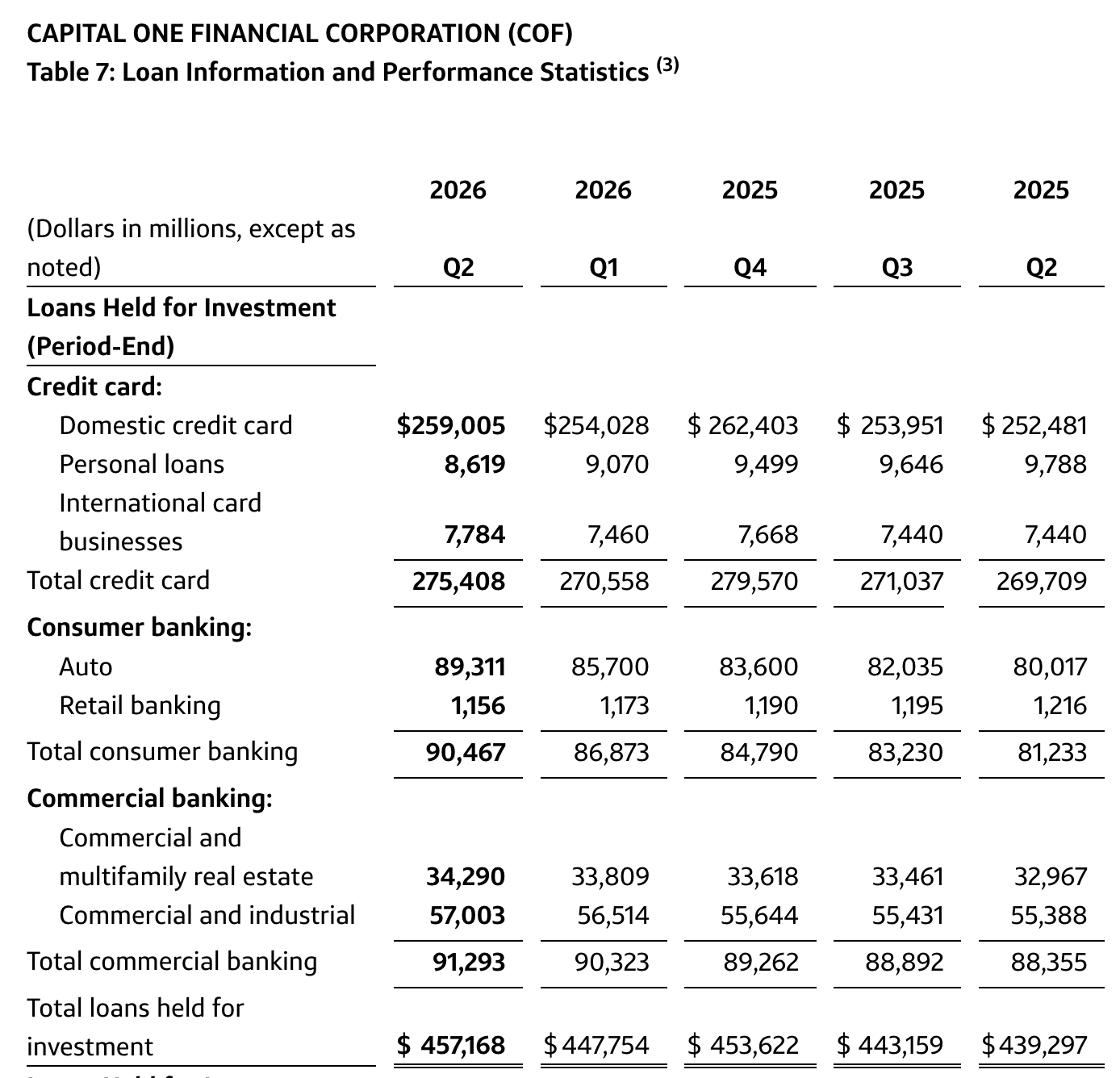
Domestic credit card balances at period end: up 2.6% year over year
Spending up 26%. Balances up 2.6%.
Fairbank described their target as “an enduring franchise with heavy spenders at the top of the domestic credit card market,” fed by premium benefits, lounges, and the travel build-out.
3. Consumer deposit growth is a first class citizen for the marketing organization
Consumer banking was mentioned specifically in Fairbank’s description of the 23% growth in marketing spend. In Fairbank’s words, Capital One wants to “to grow checking accounts on a national scale.”
He continued to say consumer banking now has “an increasing impact” on the total marketing line.
Digging into that statement a little bit, we found:
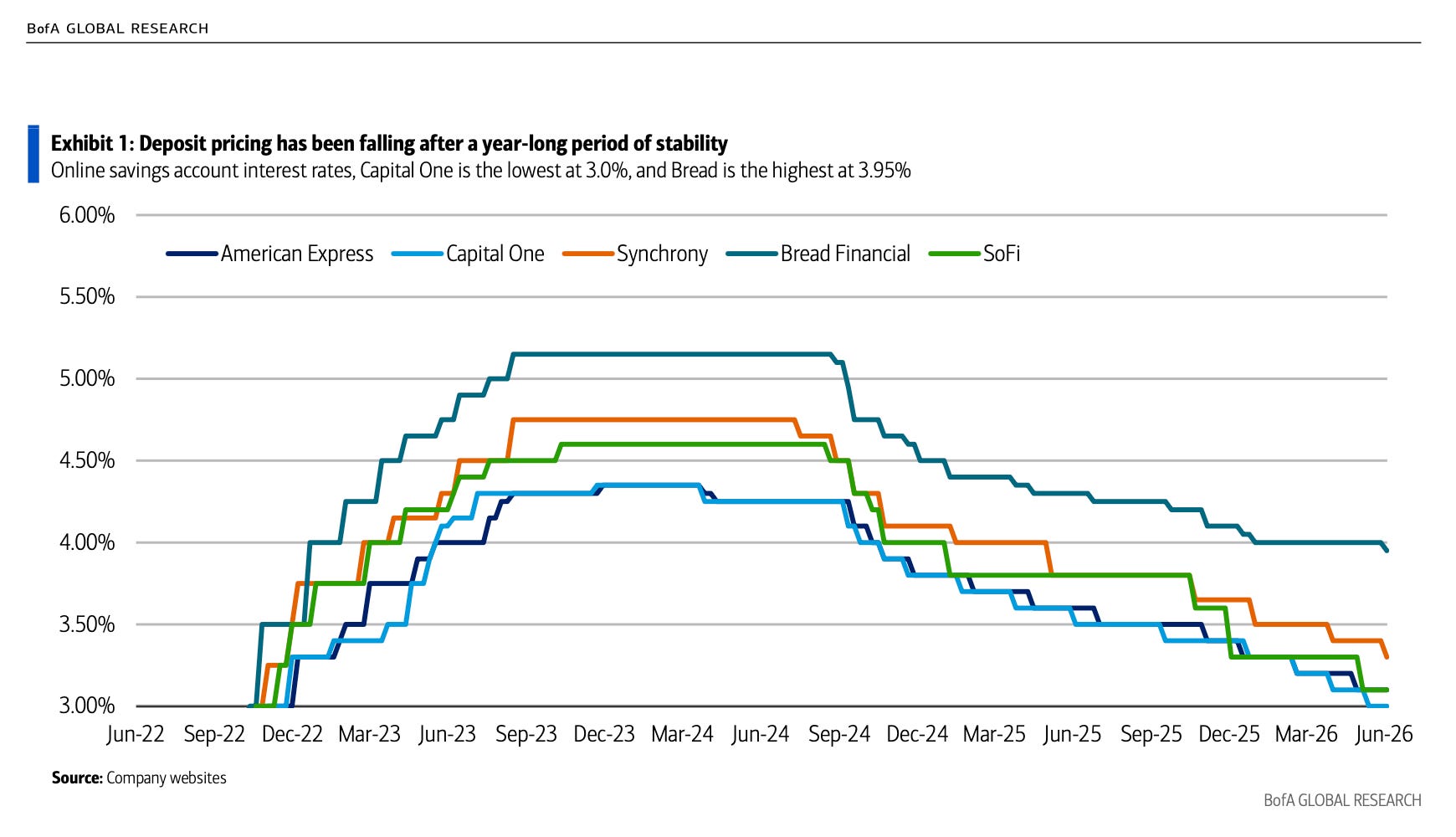
Capital One pays 3.0% on its online savings account, the lowest in the peer set BofA tracks
Bread Financial pays the most at 3.95%
Average deposits still grew 1.4% sequentially, per the press release
Rate paid fell 9 basis points, from the same press release
So deposit volume is up and rates are down, in the same quarter.
And, they’re growing deposits with the lowest interest rate in the BofA peer group.
From our 30,000 foot view, it sure seems like they have cracked the code on marketing in the consumer deposit segment. We suspect the money they spend on the brand side of the house could be a big part of their success.
4. Discover’s acquisition marketing is restarting, on a published schedule
Discover pulled back originations starting in late 2023, and Capital One trimmed further after the deal closed. Fairbank calls it “the Discover brownout.”
The result this quarter, per the call: the legacy Discover card book shrank 1.5% year over year while the rest of the book grew about 5.3%. BofA and Morgan Stanley both put the bottom around Q4.
On the earnings call, Capital One walked through the timeline of the re-boot:
Half of new Discover originations already run on Capital One’s stack
The rest land “by the end of the third quarter”
The existing book migrates “in waves: a wave in July, a wave in October, a wave in January”
And they’ve already started ramping up:
“Marketing is mostly a front-book thing. So we are, as we speak, leaning more into the marketing so that we can now generate some very good flow of applicants.”
That’s Discover’s national prime card brand, gone quiet for roughly two years, and now re-entering acquisition channels with Capital One’s models and budget behind it.
If you buy digital media, mail, or affiliate placements in the card segment, this is worth keeping an eye on.
5. Credit is strong, but the rate of improvement may be slowing
The headline numbers, from the press release and the June credit-metrics 8-K:
Domestic card charge-offs: 4.71%, down 54 basis points from a year ago
Delinquencies: 3.39%, also down
Reserve release: $662 million, including $705 million in domestic card reflecting “continued favorable observed credit in the quarter and a modest decrease in the consideration given to economic uncertainties,” per CFO Young on the call
Fairbank on the consumer:
“We don’t, in our own numbers, see this K-shaped economy that a lot of people talk about, although to be fair, we don’t really participate in the lowest end of the marketplace.”
The sell side split on what it means.
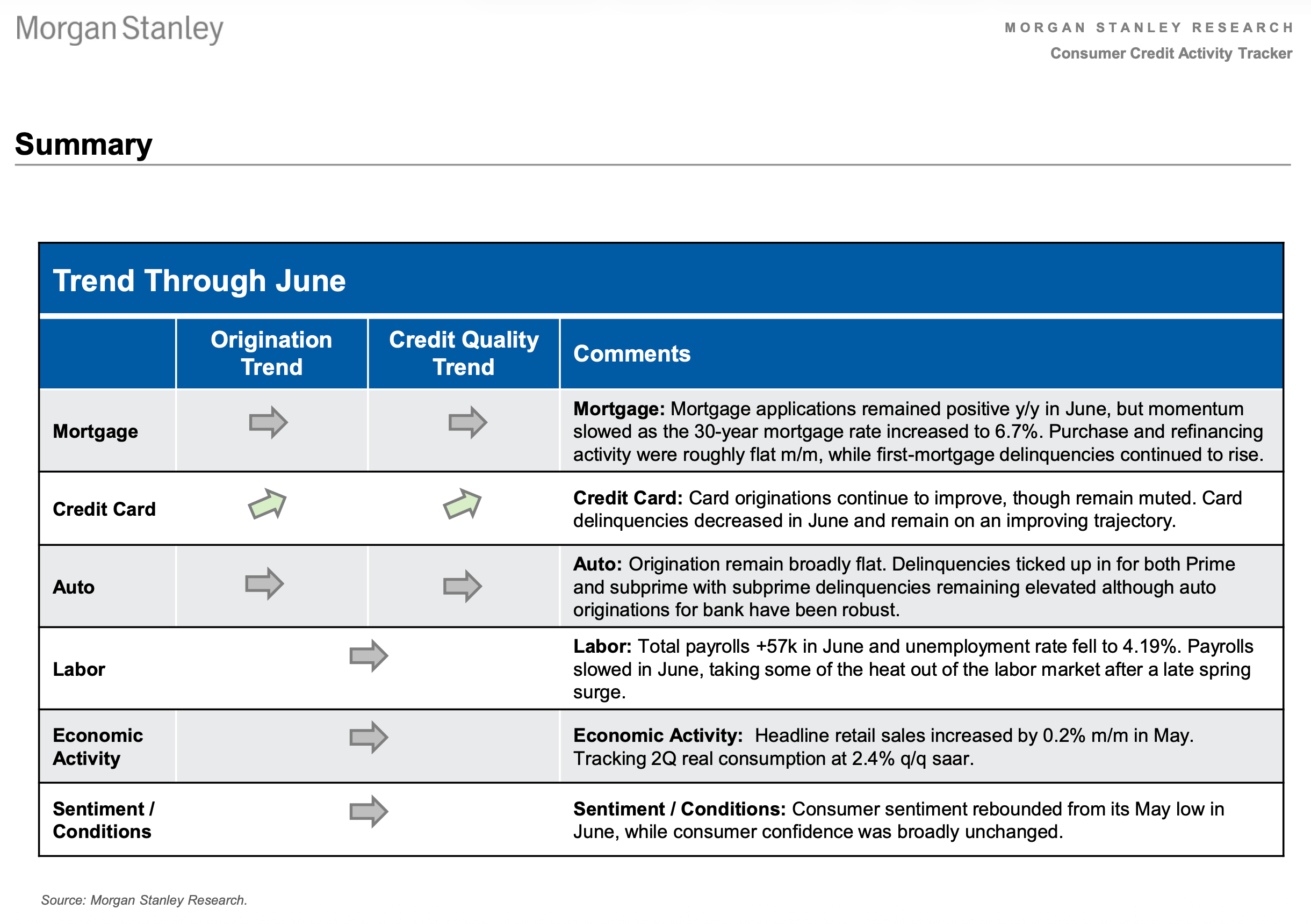
Morgan Stanley, in its July 22nd earnings note, read the reserve release as “a sign of confidence in the consumer” and thinks Capital One might have the strongest credit in its coverage.
BofA’s July 22nd note flagged the June data: delinquencies “followed normal seasonality after outperforming seasonality in most earlier months of 2026,” which “at a minimum suggests the rate of improvement in credit is slowing.” Morgan Stanley’s own Consumer Credit Activity Tracker, published July 27th, shows industry card delinquencies still improving through June.
The practical takeaway: Capital One publishes credit metrics monthly in 8-K filings. If your second-half budget assumes credit keeps improving, the 8-Ks may show the pacing before any earnings call does.
Consider checking it monthly.
TOASTER’S TAKE
Watch the mailbox and affiliate shelves for Discover. The migration waves are July, October, and January, and management says acquisition marketing is ramping “as we speak.”
The deposit growth results deserve a spot in every neobank’s board deck. Lowest rate in the peer set, deposits still growing. That’s evidence that an industry-leading brand can convince a consumer to take a rate that isn’t at the top of the comparison charts.
Track the monthly 8-Ks. One issuer’s June seasonality proves little on its own, but it’s the first data point that could put doubt on the “credit keeps getting better” narrative.
Other News
CFPB late fees, round two. The Bureau has reportedly sent a late-fee Request for Information to interagency review. Synchrony fell 9.6% and Bread Financial 8.3% on the headline. BofA’s exposure math: roughly 12% of Synchrony’s revenue, an estimated 20%-plus at Bread, about 5% at Capital One. An RFI is a question, and the last $8 cap died in court. (BofA Global Research, “Late fee redux,” July 9)
Catch you next week,
P.S.: If you’d like to sponsor or host an event in the consumer lending community in 2026, we’d like to hear from you. Reply to this email or write us at info@thefreetoaster.com.
Nice one guys. Can you link out that BofA report for Late Fee Redux? Those stats are very interesting but I can't seem to find that report online.. is it private?